
200 projects across Ireland
Exclusive Lunik system distributor
2-3 year warranty
Where we install microcement
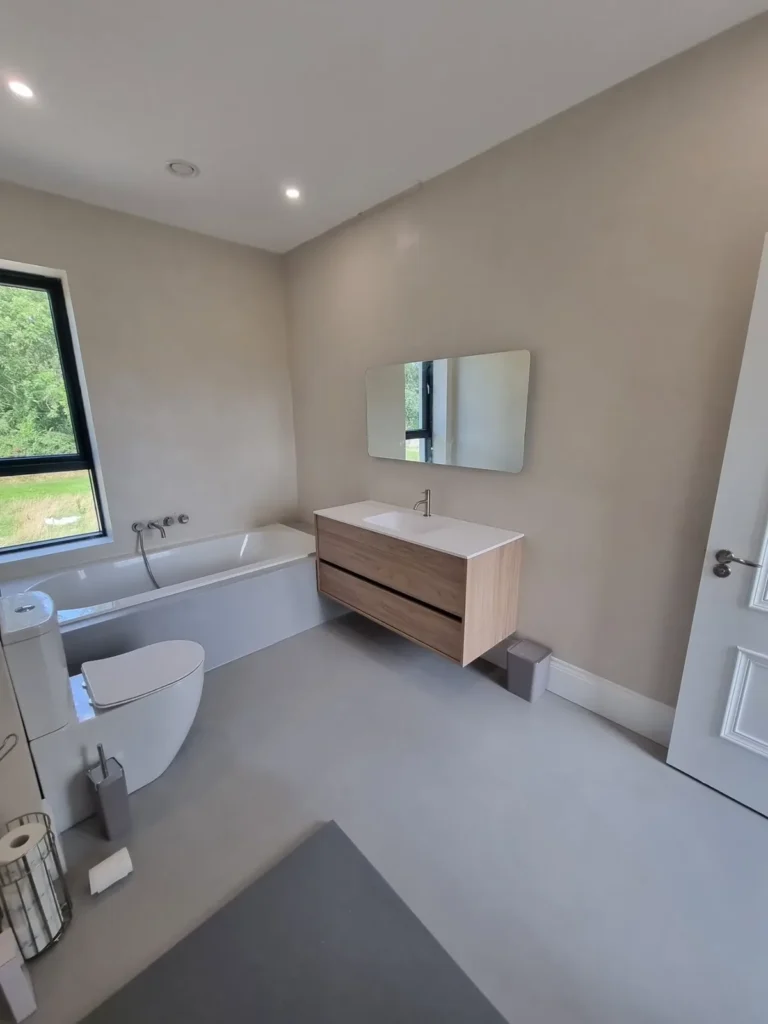
Microcement bathrooms
Walls, floor and shower in one surface, with no grout to go black.
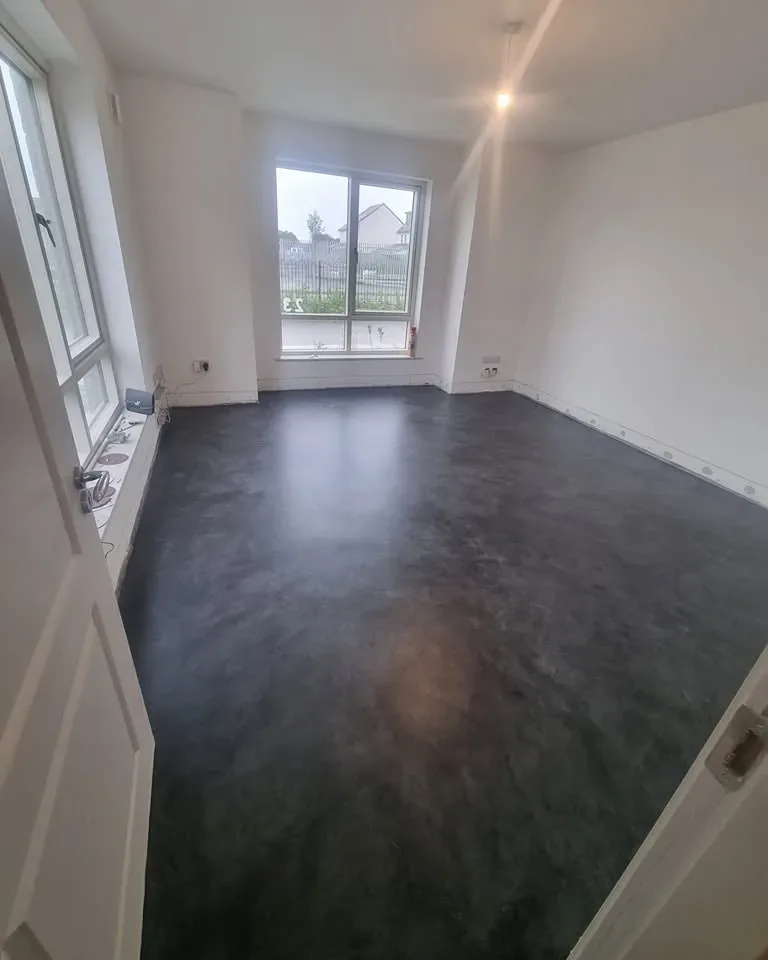
Microcement flooring
2-3 mm over tile, screed or concrete. Doors and thresholds usually stay as they are.
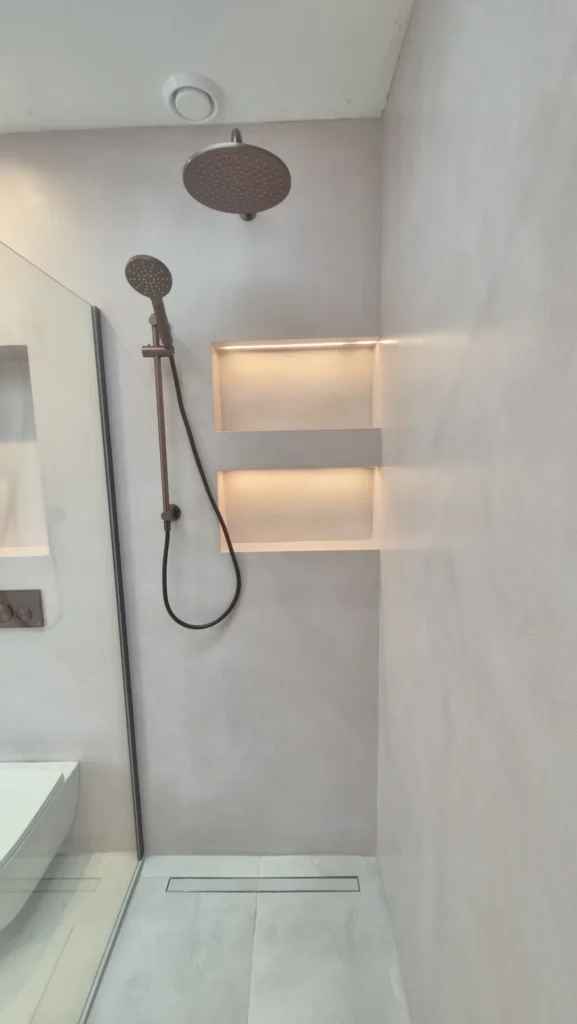
Microcement wet rooms & shower walls
Tanked and fallen to the drain before any microcement goes on.
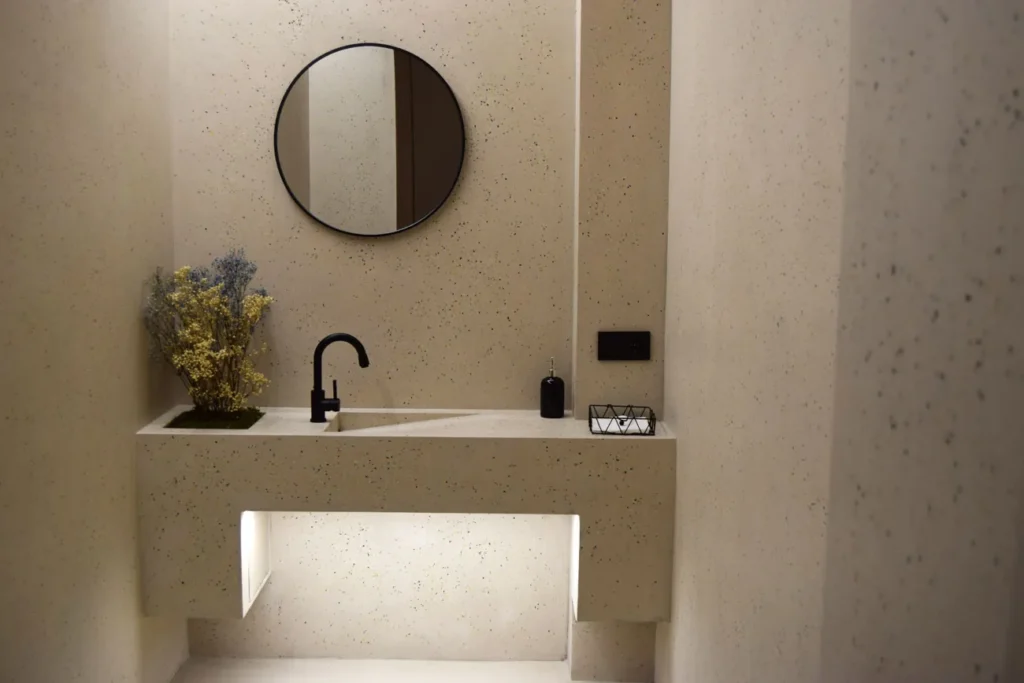
Microcement kitchens, worktops & sinks
Worktops, splashbacks, integrated sinks and furniture.

Microcement walls & ceilings
Feature walls, hallways and ceilings with no visible joins.

What is microcement?
Microcement is a decorative coating applied by hand in thin layers, 2-3 mm in total, over existing floors, walls, bathrooms, stairs and furniture, so a room reads as one continuous surface with no grout lines. It is not one product but a family of systems, cement-based, hybrid and epoxy, each a matched set of primer, base, finish and sealer. The system chosen for the room matters more than the colour. Prefer a lime finish with more depth? See Venetian plaster.
Read the guide: what is microcementWhy people choose microcement
It goes over what is there, so no rip-out, no rubble, no skip on the drive.
One continuous surface, so nothing to scrub and nothing to discolour.
Floor heights barely change, so skirting, doors and thresholds usually stay.
Used in showers and wet rooms over a tanked substrate.
Heat comes through faster than through tile or screed.
Matte, satin or gloss, in four grain sizes from smooth to rustic.
Does microcement crack?
It can, and anyone who says otherwise is selling something. Microcement cracks when what is underneath moves, when damp is trapped or when joints are covered over. It fails from below, not from above, so we check three things before we price a job:
A floor that flexes or a hollow tile bed will crack a 2 mm coating. We tap every surface first.
Damp trapped under a sealed finish has nowhere to go. It gets dealt with before anything goes on.
Expansion and movement joints are carried through the finish, not covered over and hoped for.
If a substrate cannot be made right, we say so and turn the job down. We do not claim microcement never cracks. We know why it cracks, and we prepare for it.
Microcement vs tiles, polished concrete and resin
The four finishes people usually weigh up for a floor or a bathroom, side by side. None of them is right for every room; this is where each one stands.
Microcement
Tiles
Polished concrete
Resin
Joints
None: one continuous surface
Grout lines throughout
Saw-cut joints across the floor
None
Over existing tiles
Yes, if they are sound
No, old tiles usually come out
No, needs a new slab
On a sound, flat base
Thickness
2-3 mm
10-20 mm with adhesive
A full slab
A few millimetres
Walls and showers
Floors, walls and shower trays
Yes
Floors only
Mostly floors
Look
Hand-trowelled, mineral, varies across the surface
Even, with a repeating grid
Industrial, aggregate shows
Even and uniform
Time out of use
5-7 working days
Often two weeks with removal
Weeks while the slab cures
A few days
Which Lunik system goes where
Microcement is not one product. Each of these is a system: a matched set of primer, base, finish and sealer that are not interchangeable. Which one goes into your room is decided before we quote, based on the traffic it takes, how wet it gets and what is underneath.
Read more +
System
Suits
OneRock
Everyday surfaces. Four grain sizes, smooth to rustic.
OnePox
Heavy traffic and wet areas.
Terrazzone
Seamless terrazzo, no chips and no grout.
OOXID
Liquid metal in steel, bronze or brass.

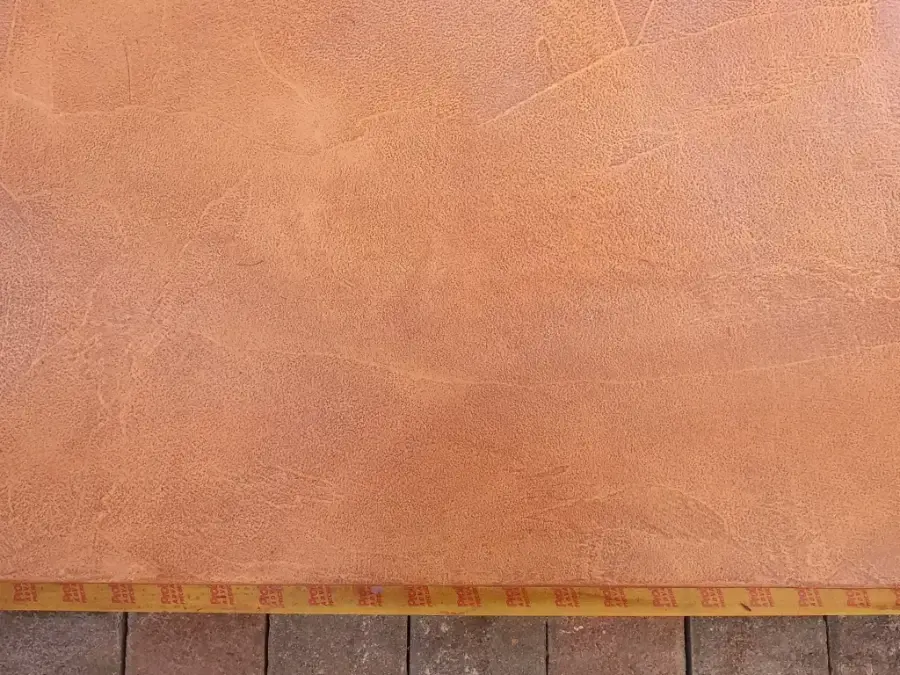
Microcement colours, texture and finishes
32+ colours in the Lunik range, four grain sizes that set the microcement texture, from smooth to rustic, and three sealer sheens. Grain and sheen change a room more than colour does: a smooth matte wall and a rustic satin one in the same colour look like different materials. We make a physical sample in your colour so you can hold it against your own light and units.
Explore colours and finishesMicrocement cost in Ireland
In Ireland, microcement usually costs €120–€250 per m² installed. That covers substrate preparation, tanking in wet areas, every coat, the sealer and the warranty. Quotes far below that are usually supply-only, or installation without the preparation. Against new tiles it often works out cheaper overall in a refurbishment: no tile removal, no skip, no new screed, and the room is back in use in 5-7 working days. Projects start from 20 m², and every price is given after we have seen the substrate.
Read moreRecent microcement projects
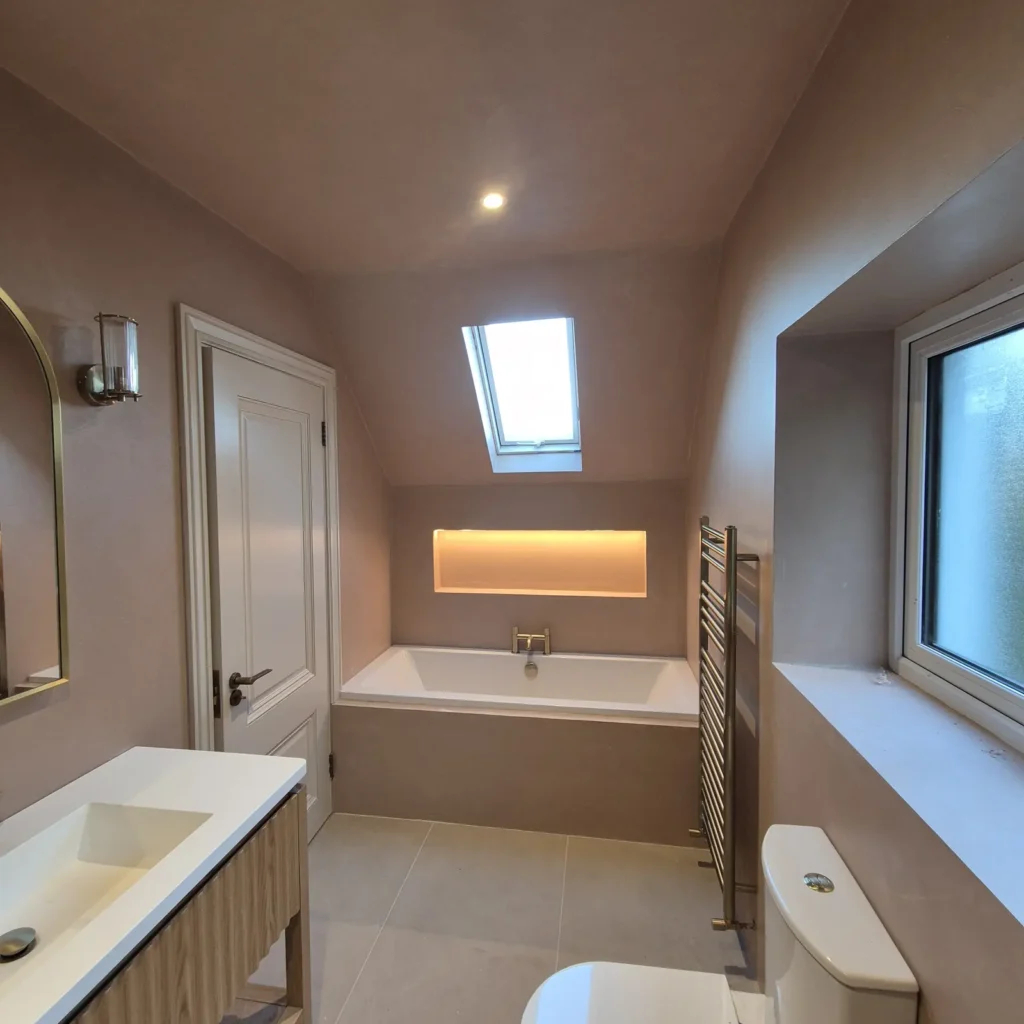
Microcement bathroom with a lit niche, warm grey
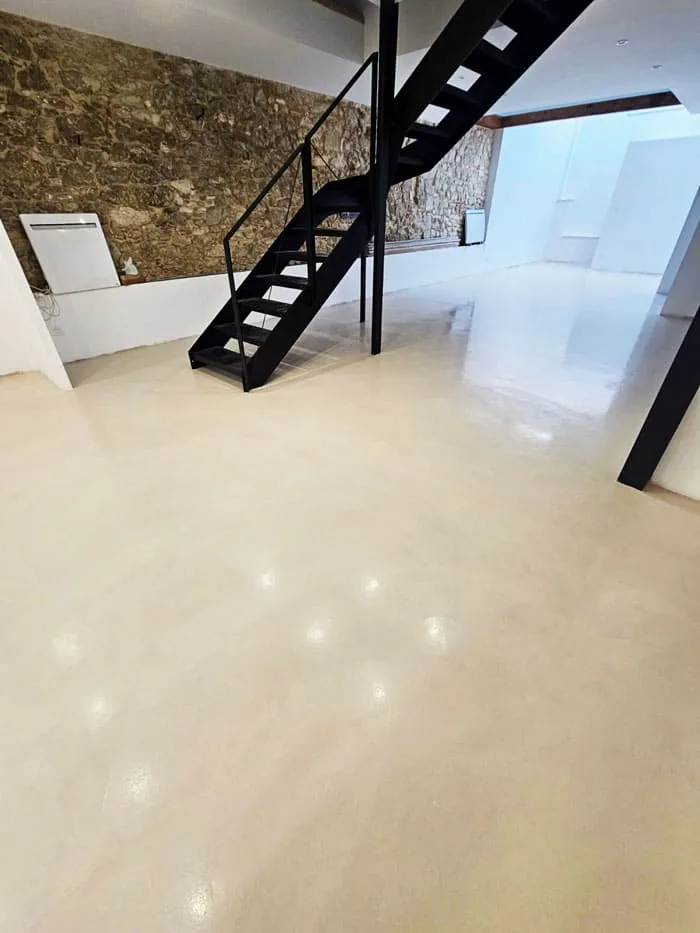
Microcement floor through an open-plan ground floor

Microcement wet room with walk-in shower
Nationwide from Kildare
Microcement across Ireland
We work nationwide from Kilcullen, Co. Kildare. Most weeks we are somewhere in Kildare, Dublin, Cork or Galway. For counties further out we schedule work in blocks, so timing depends on what else is running there.
Read more +
We also work in Carlow, Cavan, Clare, Donegal, Kerry, Kilkenny, Laois, Leitrim, Longford, Louth, Mayo, Meath, Monaghan, Offaly, Roscommon, Sligo, Tipperary, Waterford, Westmeath, Wexford and Wicklow. Further from Kildare, jobs are scheduled in blocks of consecutive days, so the start date depends on what else is running in that county.
FAQ
Microcement questions, answered
Does microcement crack?
It can, when the surface underneath moves, when damp is trapped or when joints are covered over. That is why we check the substrate, moisture and joints before quoting, and turn work down when a surface cannot be made right. How we prevent it.
Is microcement cheaper than tiles?
Per m² it is broadly comparable with a good tiling job. In a refurbishment it often works out cheaper overall, because there is no tile removal, no skip, no new screed and no grout, and the room is out of use for 5-7 working days rather than two weeks.
Can microcement go over existing tiles?
Yes, on sound, well-fixed tiles. Anything loose or hollow comes off first, and that appears on the quote rather than as a surprise on day two.
Is microcement waterproof?
Yes, once sealed and cured. Wet areas are tanked first, so the waterproofing sits under the finish rather than depending on it.
Do you install microcement near me?
We work in every county from Kilcullen, Co. Kildare. Kildare, Dublin, Cork and Galway most weeks, elsewhere in scheduled blocks.
Do you supply microcement as well as installing it?
Both. We are the exclusive distributor of the Lunik system for Ireland and Northern Ireland, and we supply certified applicators. We do not sell to the public for DIY.
Is there a minimum project size?
Yes, 20 m². Preparation takes much the same time in a small room as in a large one.
Can microcement be used with underfloor heating?
Yes. At 2-3 mm the heat comes through faster than through tiles or screed.
How long does microcement last?
Properly prepared and sealed, for many years. Walls see little wear; floors last longest when the sealer is looked after and refreshed in busy areas. Our work carries a 2-3 year warranty depending on the project.
Can microcement be repaired?
Yes. Scuffs and worn patches in the sealer can be cleaned back and resealed, and a chip or damaged area can be filled and refinished locally. On a large plain surface we blend a repair out to a natural break so it does not show as a patch.
How do I clean microcement?
Warm water and a pH-neutral cleaner with a soft mop or cloth. Avoid bleach, acidic or abrasive cleaners, scouring pads and steam cleaners, which attack the sealer. You get written care instructions at handover.
Is microcement slip resistant?
It can be made so. Grip comes from the grain and the sealer: shower and wet-room floors get a coarser grain and a slip-resistant sealer where feet land. We do not put a smooth gloss finish on a wet floor.
Can I apply microcement myself?
We do not sell microcement to the public for DIY. It is a system of primer, base, finish and sealer laid in thin coats, and most failures come from the preparation and the layering rather than the material. We supply the Lunik system to certified applicators, or install it ourselves.
Start your project
Ready to talk about your room?
Tell us what you have and what you want it to look like. You get a sample in your colour and an itemised quote, with no obligation.