Microcement Walls and Ceilings in Ireland
Feature walls, hallways and ceilings with no visible joins, hand-applied over plaster, board or tile.
5.0 ★★★★★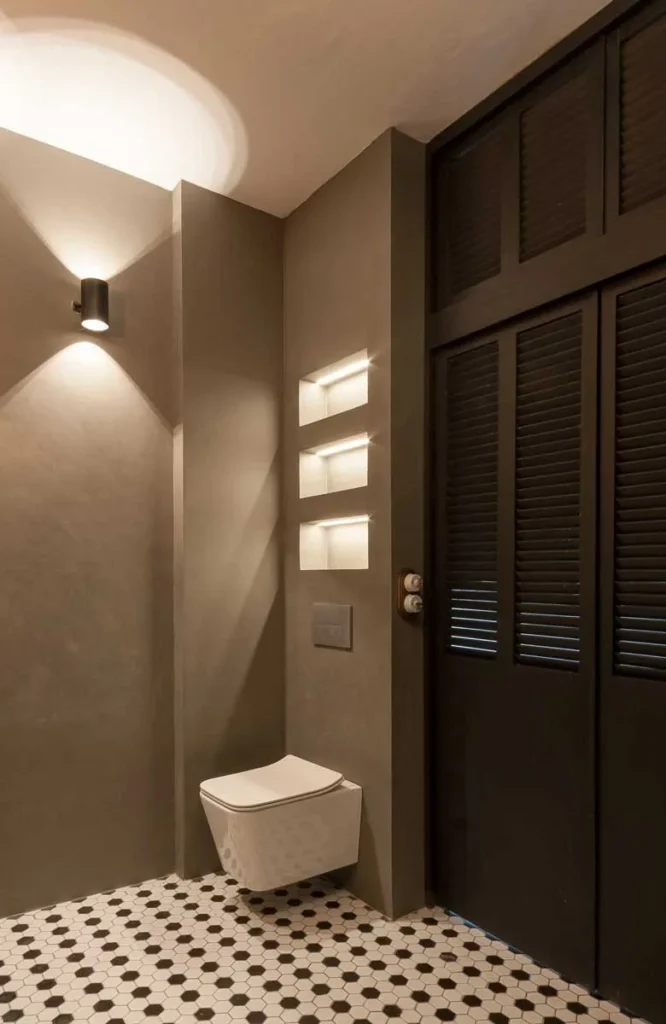
No visible joins
Over plaster, board or tile
Feature walls and ceilings
Why choose us for your walls
A wall shows every flaw in the light. We prepare the surface flat before the first coat, and the same team carries the job from the first visit to handover. We work on interior walls and ceilings.
Walls are filled, sanded and primed flat first, because side light shows every ripple in a finish this thin.
Feature walls, hallways and ceilings in one continuous surface, without the seams of panels or tiles.
Plaster, plasterboard or sound tile can usually be coated as they are, after the right primer.
What our clients say
“I can't recommend Haris enough. He's very skilled, respectful and trustful. He was always on time and worked weekends to finish a project which was delayed by another contractor. I am delighted with the microcement in my bathroom. I will choose Haris again.”
“I couldn't recommend Harris more highly. Such a lovely person, extremely knowledgeable, particular and punctual. Came onto a job that was left in a mess by …”
“We had the pleasure of working with Haris on a microcement project, and we couldn't be happier with the results. His passion for his craft is evident in every …”
Recent walls and ceilings
We install microcement walls and ceilings across Ireland, most weeks in Kildare, Dublin, Cork and Galway. Further out, jobs are scheduled in blocks, so the start date depends on what else is running in that county.
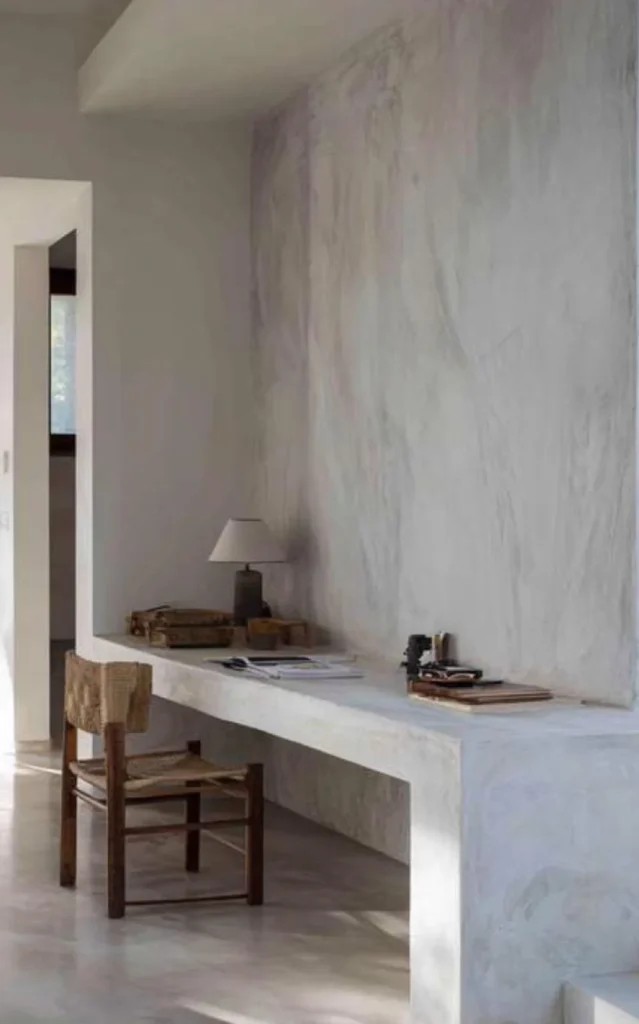
Feature wall
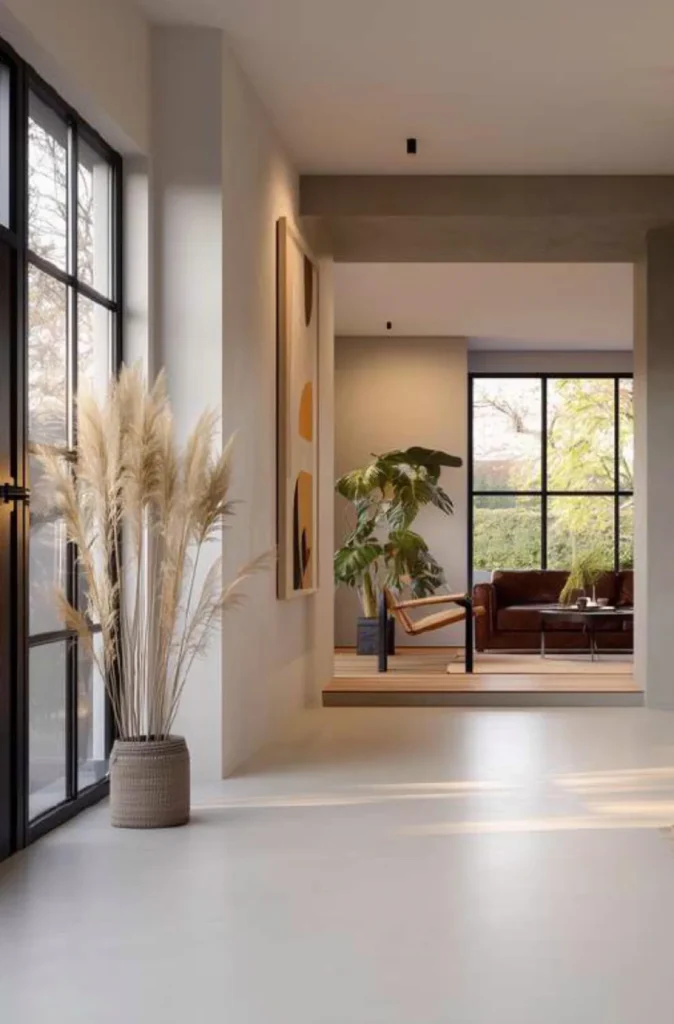
Wall turning a corner and continuing down a hallway with no join
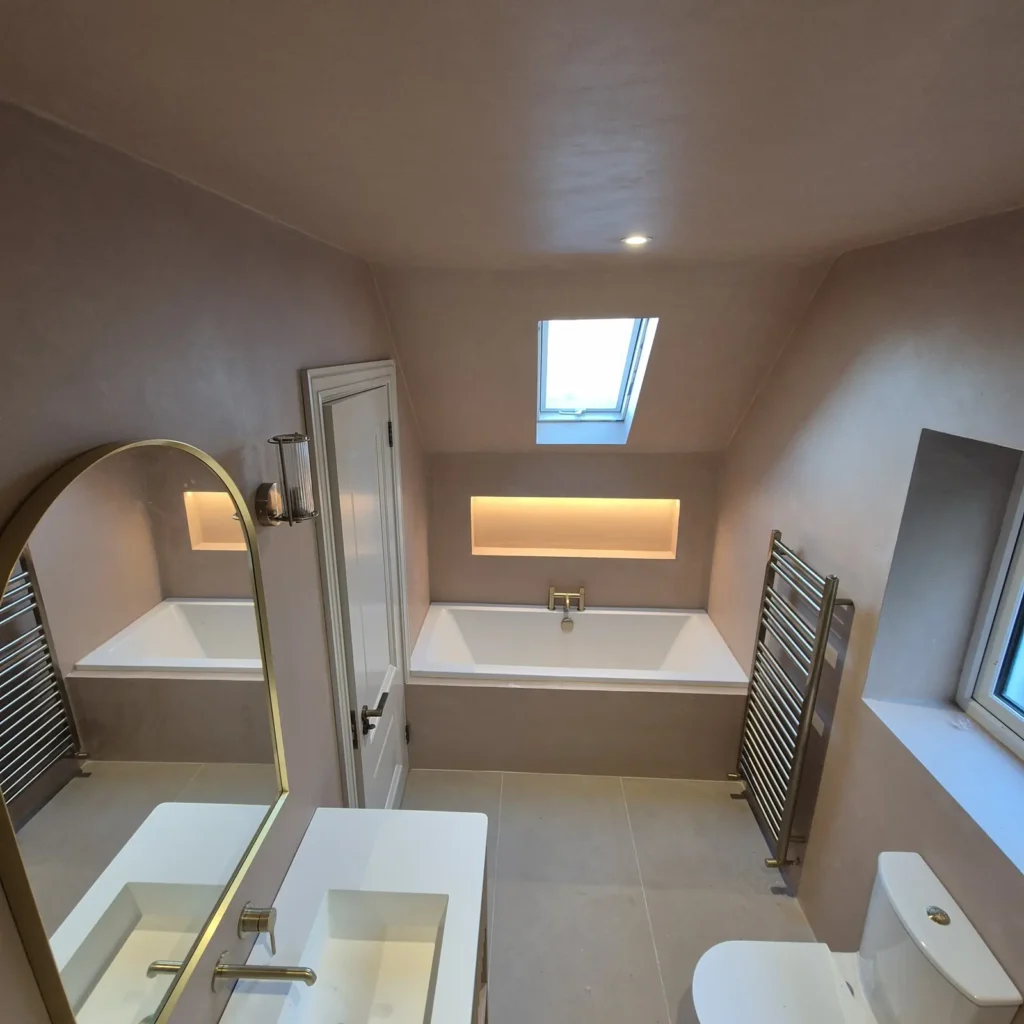
Walls and sloped ceiling around a skylight
Ready to start on your walls?
Tell us about your space and send a few photos. We will arrange a visit, look at what is there now and come back with a clear, itemised quote.
Where microcement walls work
Behind a bed, behind a television, one wall of a living room. The finish reads as a single slab, so the wall does the work in a room with little else in it.
The surface people brush past daily. Tougher sealer, and a texture that hides hand marks.
Walls and ceiling in one colour, which removes every corner line and makes a small room read as one volume.
No bead line where two planes meet. Fine around a stove at normal distances; close to a firebox, or for a lime-plaster look, see Kitchens and fireplaces. A surround on its own comes in under our minimum.
Read more +

Microcement or concrete-effect panels, tile and polished plaster?
Concrete-effect wall panels are quick to fit but carry a joint and a fixing detail every metre or so. Tile has grout. Microcement is applied wet, by hand, so a whole wall, a corner and the hallway beyond it are one surface, in a concrete or stone-like look. If you would rather have the soft, burnished depth of lime, that is polished plaster, which we also apply: see our Venetian plaster walls and ceilings. Not sure which suits the room? Send us a photo and the light it gets, and we will tell you.
Quick to fit, with a joint and a fixing detail every metre or so.
Grout lines across the whole wall.
The soft, burnished depth of lime. We apply it too.
Applied wet, by hand: a wall, its corner and the hallway beyond are one surface, in a concrete or stone-like look.
What microcement walls can be applied over
Microcement is only 2-3 mm thick, so it shows whatever is underneath. Before we quote, we check that the wall is flat, sound and dry. This is what we look for on each type of wall.
A good base once the joints are taped, filled and primed properly.
Sound paint is keyed; flaking or chalky paint comes off first.
Works well: flat, rigid and already bonded. Grout lines are filled flush.
The cause is fixed first. Coating over damp leads to lifting within months.
Microcement walls: skirting, architrave, sockets and corners
The details are most of the skill on a wall job.
Taken off and refitted over the finish for the cleanest result, or stopped neatly against it with a fine silicone joint.
The finish runs behind them or stops cleanly against them, cut by hand to a crisp straight line.
Faceplates off before we start and back on after sealing, so no cut edge shows.
External corners formed to a small radius so they do not chip, and a clean, deliberate line where wall meets ceiling.
Microcement ceilings, and what raking light does
Ceilings are the hardest surface in this trade, and they are where you can tell in ten seconds who applied a finish. The reason is light. On a wall it arrives roughly square to the surface. On a ceiling, light from a window or a downlight travels almost parallel to it, so it casts a shadow from every ridge, every trowel stop and every hollow of a fraction of a millimetre. A ceiling that looks perfect at noon can show every pass at 6pm with the lamps on.
The substrate brought properly into plane, the layers kept even, and sanding between coats to a standard a wall would not need.
We plan the lighting with you, because a downlight 100 mm below a ceiling is a raking-light machine.
A textured grain is more forgiving up there, because a defect in a pattern reads as pattern.
Read more +
So a ceiling takes more preparation than a wall, not less.
What decides the price of microcement walls and ceilings?
The price follows the area, the ceiling height and the condition of the surface underneath: a flat, sound wall is quicker than one that needs filling and skimming. Ceilings take more preparation and finer sanding than walls, so they are priced higher. The grain and sealer you choose, and the number of corners, reveals and details, also count. We price after we have seen the room, with preparation and finishing as separate lines. For what sits behind the numbers, read our microcement cost guide.
Read our guide: microcement cost in Ireland →Microcement wall texture, grain and colour
As exclusive distributor of the Lunik system for Ireland and Northern Ireland, we choose the system, the sealer and the grain for the surface. On walls we mostly use matte or satin: gloss on a large wall reflects every light source and shows every mark.
Reads as poured concrete. Suits a room with soft or indirect light, and needs the best preparation underneath.
Hallways, stairwells, and anywhere a window throws light along the wall. The texture absorbs the shadowing instead of fighting it.
An obviously handmade, stone-like surface where marks need to disappear.
OOXID for a metallic surface in steel, bronze or brass → More on Ooxid. For a lime-plaster look → Plaster walls and ceilings
Read more +
Colours come from the Lunik range, 32+ options. A colour never looks the same on a sample board as on a 6 m wall: the larger the area, the deeper it reads. Hold a sample against the wall, morning and night.
Microcement wall questions
Can microcement go on plasterboard?
Yes, and it is the most common substrate for a feature wall. The board must be properly fixed, with taped and reinforced joints, then primed. Joints filled with quick filler and sanded are not enough: that line shows through permanently.
Does a microcement wall have joins?
No. It is applied wet, in layers, by hand, so a whole wall, a corner and the hallway beyond it are one continuous surface with no sheet edges, trims or grout. The only lines are ones we agree with you.
Can you microcement a ceiling?
Yes, and it is the most demanding surface we do. Light from a window or a downlight rakes across a ceiling almost parallel to it, shadowing every ridge and hollow. Ceilings get more preparation and finer sanding, and are priced higher.
What happens to the skirting boards with microcement walls?
Three options. Take it off, run the finish to the floor and refit it over the edge, which is the cleanest line. Stop neatly at the existing skirting with a fine silicone joint. Or finish to a shadow gap.
Can microcement go over painted walls or wallpaper?
Over sound paint, yes, abraded and primed first. Wallpaper comes off, always, along with any chalky, flaking or distemper coating. The finish is only as well attached as whatever is underneath it.
Can you hang pictures on a microcement wall?
Yes. Fixings go through the coating into the wall behind, exactly as through paint. Drill on a low speed without hammer action and the finish will not chip. Tell us where heavy items are going before we start.
Can microcement be applied to a curved wall?
Yes, and curves are where it beats every sheet material outright. A trowelled coating follows a curve, a column or a rounded corner with no cuts and no faceting. Tile and panel have to be cut into strips, and you see every one.
How much do microcement walls cost?
It depends on the area, the ceiling height and the state of the walls: a flat, sound wall is quicker than one that needs filling or skimming. We quote after seeing the room, with preparation and finishing as separate lines. Our microcement cost guide explains what sits behind a quote.
Is microcement a good alternative to concrete-effect panels or tiles?
For a seamless look, yes: there are no panel joints, fixings or grout lines, and it goes round corners and curves in one piece. Panels are quicker to fit and easier to replace. If you want a continuous surface that is part of the wall rather than fixed to it, microcement is the stronger choice.
Is a microcement wall permanent?
Effectively yes. It bonds to the wall and is not designed to come off, so it is the wrong finish for a rented home. If you may change your mind later, tell us before we start.
How do I clean microcement walls?
A soft cloth with warm water and a pH-neutral cleaner. Avoid bleach, scouring pads and acidic cleaners, which can dull the sealer. Hallway walls get a tougher sealer and a texture that hides hand marks.
More microcement
Get a sample in your colour, and a quote on your room
Tell us the room, roughly how many square metres, and what is on the walls and floor now.